
The Retro Your Team Might Be Missing
I recently facilitated three retrospectives where teams reflected on an entire year of working together.
Looking that far back, they noticed patterns, made connections, and uncovered issues that hadn’t come up in sprint retros.
For example:
- “Higher churn in our work corresponds to lower morale.”
- “Instead of pivoting gracefully, we drop everything, and there are consequences.”
- “Our MVPs are too complete. What are we really optimizing them for?”
- “Getting started is hard for us, but once we’re in engineering mode, things are good.”
- “We’re used to our weekly release process, but it’s painful.”
The teams had been especially busy the previous few months, which gave them plenty to reflect on. The retros also gave them a chance to recharge before diving into the next roadmap items.
About half the teams I know run sprint retros somewhat regularly. The rest? Rarely, or too superficially to matter. But almost no team runs retrospectives for larger timescales, like quarters, releases, or projects.
As a result, they miss out on system-level improvements, powerful team-building, and chances to prevent repeated mistakes. And all it takes is a few focused hours, a couple of times a year.
Here are my tips for your next large-scale retro:
Get a facilitator. That will free you to participate and improves outcomes.
Be inclusive. This is a chance for the whole system to adjust, so invite people who work with the team but don’t attend sprint retros.
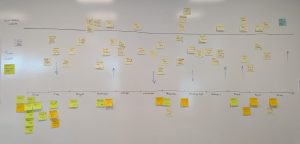
The timeline from one of the teams
Be clear and firm on whether the event is in-person, online, or hybrid, and plan accordingly. (This is one case where I strongly advise against hybrid.)
Start by spending 30-50 minutes constructing a timeline of significant events. This gives everyone a shared picture of everything that happened, and is the basis for the rest of the retro.
Focus on learning, not reporting. This isn’t about producing summaries for management. Create a safe environment for honest reflection.
Don’t wing it. As a facilitator, I usually spend about two hours of prep for every hour of delivery. The objectives, deliverables, agenda, process, and activities are critical.
Don’t rush it. Reflecting on months of work involves deep thinking. Give people space to process.
If it’s been months since your team reflected deeply on how it works, schedule such a retro. It’s a small investment with a big payoff.
Copyright © 2025, 3P Vantage, Inc. All rights reserved.